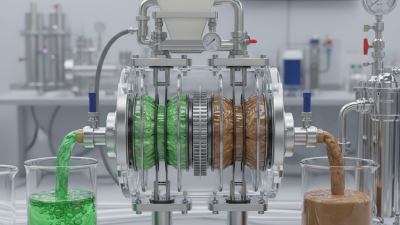
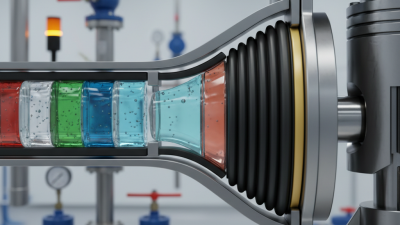
What is a Diaphragm Pump and How Does It Work?
The diaphragm pump is a crucial component in various industries, offering unique advantages in fluid handling. According to a recent market report by Research and Markets, the diaphragm pump market is projected to reach $4.37 billion by 2025, indicating robust growth in sectors such as wastewater treatment and chemical processing. This surge reflects the increasing demand for safe and efficient pumping solutions.
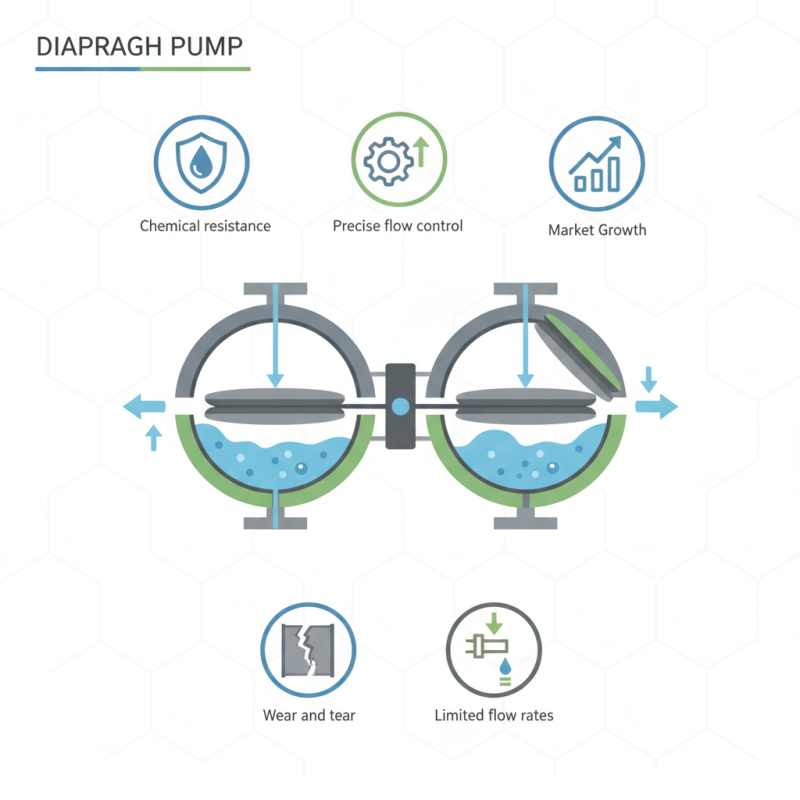
Understanding how a diaphragm pump operates can illuminate its significance. The mechanism relies on flexible membranes to create suction and discharge, making it suitable for handling viscous fluids and slurries. This versatility is appealing to many industries. However, there are challenges, including wear and tear on diaphragms, which can lead to maintenance issues.
The diaphragm pump excels in situations where precise flow control is essential. It provides chemical resistance, ensuring safety when transporting hazardous materials. Still, users must consider potential drawbacks, such as limited flow rates compared to other pump types. As industries evolve, the role of diaphragm pumps continues to adapt, underscoring their importance in modern fluid management solutions.
What is a Diaphragm Pump?
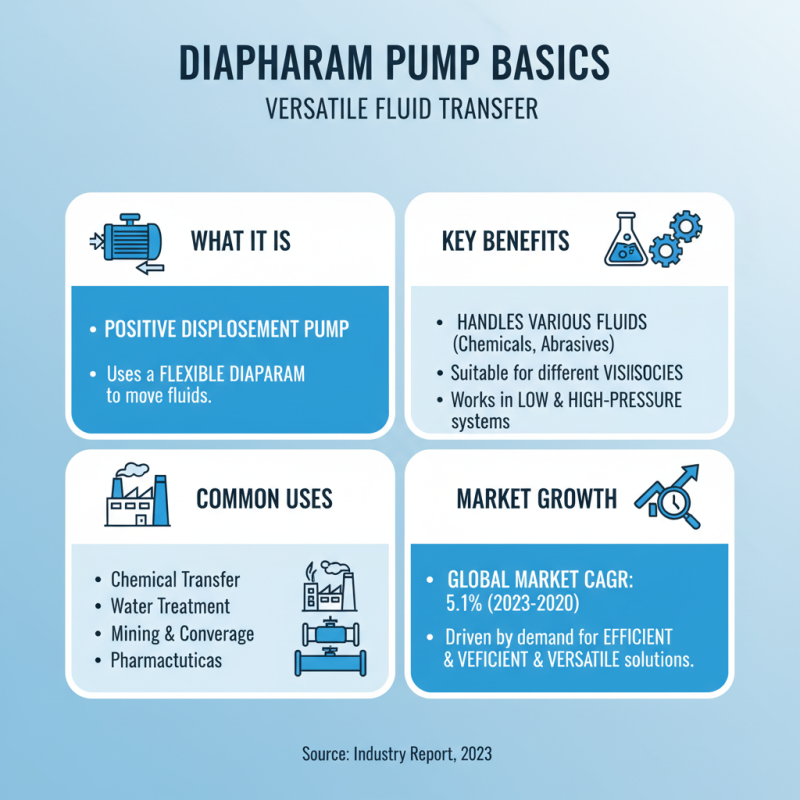
A diaphragm pump is a positive displacement pump that uses a diaphragm to move fluids. This mechanism provides a reliable solution for various applications, from transferring chemicals to handling abrasive fluids. Diaphragm pumps can handle different viscosities and make them suitable for both low and high-pressure systems. According to a recent industry report, the global diaphragm pump market is expected to grow at a CAGR of 5.1% between 2023 and 2030. This growth reflects industries' increasing need for efficient and versatile pumping solutions.
The working principle of a diaphragm pump is straightforward yet effective. When the diaphragm flexes, it creates a vacuum that draws fluid into the pump chamber. As the diaphragm pushes back, the fluid is expelled through a discharge valve. This design allows for a high degree of precision and prevents backflow. Data indicates that diaphragm pumps can achieve efficiency rates of up to 85%, making them a preferred choice in many sectors, including pharmaceuticals and food processing.
Despite their advantages, diaphragm pumps are not without challenges. They require regular maintenance to ensure optimal performance. The diaphragm material can degrade over time, leading to leaks and efficiency loss. Furthermore, users must consider compatibility with the fluids being pumped. A mismatch can lead to significant operational issues. Understanding these limitations is crucial for effective application. Careful selection and maintenance can mitigate these risks, allowing for improved reliability in various processes.
Key Components of a Diaphragm Pump
A diaphragm pump is a unique type of positive displacement pump. It utilizes a flexible diaphragm to create a vacuum that draws fluid into the chamber. Understanding the key components is essential for effective use and maintenance.
The diaphragm is the heart of the pump. It can be made from materials like rubber or thermoplastic. This component flexes back and forth to move fluids. Attached to the diaphragm is a set of check valves. These valves ensure the fluid flows in one direction, preventing backflow. A reliable spring mechanism keeps the diaphragm in its intended position.
In addition to the diaphragm and valves, the pump housing plays a crucial role. It protects internal components and supports the attachment points. Mounting brackets help keep the pump steady during operation. Sometimes, users overlook the significance of regular maintenance. Neglecting this can lead to performance issues over time. Proper lubrication and inspection of the diaphragm can enhance longevity and efficiency.
How Diaphragm Pumps Operate Step by Step
Diaphragm pumps are fascinating devices used to move liquids or gases. Their operation involves several key steps that are crucial for their efficiency. The process begins with an inlet valve opening, allowing the fluid to enter the holding chamber. This is made possible due to the diaphragm's movement, which is controlled by a mechanical actuator. As the diaphragm flexes, it creates a void, drawing the fluid in.
The next step involves sealing the fluid in the chamber. Here, the diaphragm moves in the opposite direction, compressing the fluid and pushing it out through the outlet valve. The timing of valve openings is critical; if not managed properly, backflow can occur, leading to inefficiencies. This part of the operation needs careful design.
Many overlook the importance of regular maintenance. Over time, wear and tear can affect performance. Monitoring for leaks or declining pressure is essential. Ignoring these signs can lead to system failures and costly repairs. Understanding the fundamentals of how diaphragm pumps work can aid in maintaining their reliability.
What is a Diaphragm Pump and How Does It Work?
| Feature |
Description |
| Definition |
A diaphragm pump is a type of positive displacement pump that uses a diaphragm to displace fluid. |
| Principle of Operation |
The diaphragm moves up and down, creating a vacuum that draws fluid in and then pushing it out through discharge valves. |
| Types |
There are air-operated diaphragm pumps and electrically driven diaphragm pumps. |
| Applications |
Commonly used in chemical transfer, food processing, and wastewater treatment. |
| Advantages |
They can handle viscous fluids, are self-priming, and can operate dry without damage. |
| Disadvantages |
Limited to lower flow rates compared to other pump types and can be more expensive. |
| Maintenance |
Regular inspection of the diaphragm for wear is essential to ensure optimal performance. |
Applications of Diaphragm Pumps in Various Industries
Diaphragm pumps are widely used across various industries due to their unique capabilities.
In the chemical sector, these pumps handle corrosive substances with ease.
Their design minimizes leakage and ensures safety. This reliability is vital in environments where toxic materials are present.
Operators can rely on them for consistent performance, even with varying viscosities.
In the food and beverage industry, diaphragm pumps play a crucial role.
They help move products like sauces and dairy without contaminating them. The sanitary design meets strict health regulations.
This is essential for maintaining product integrity. However, ensuring proper cleaning protocols can be challenging.
Inadequate cleaning may lead to cross-contamination.
Water treatment facilities also benefit from diaphragm pumps.
They efficiently manage slurries and wastewater. This helps in the purification processes.
Yet, the robustness of these pumps can be overstated. They require regular maintenance to avoid breakdowns.
Neglecting routine checks may lead to reliability issues.
Understanding these factors is key to maximizing their potential.
Advantages and Disadvantages of Diaphragm Pumps
Diaphragm pumps have notable advantages. They can handle a wide range of fluids, including corrosive or viscous ones. Their simple design makes maintenance easier. Many users appreciate their ability to self-prime. This pump operates with minimal vibration, creating a smoother flow. It's an excellent choice for applications requiring precise fluid transfer.
However, diaphragm pumps are not without downsides. They may struggle with high flow rates compared to centrifugal pumps. Continuous operation can cause wear on diaphragm materials. Some users find the initial cost steep when starting out. Their efficiency can drop when pumping gases, which can lead to cavitation issues. It's essential to consider these factors when selecting a pump for your needs.
Advantages and Disadvantages of Diaphragm Pumps


 Tangential Flow Filtration(TFF) System
 Jump Pump
 FIT Integrity Tester
 High Pressure Homogenizers
 Microfluidics