What Is Filtration Media and Which Type Is Best?
Choosing the right Filtration Media is not a matter of selecting the most expensive material. It depends on water chemistry, particle size, flow rate, pressure, temperature, and treatment goals. A clear filter vessel can still hide poor performance. Fine sand may remove suspended solids, while activated carbon can reduce chlorine, odors, and some organic compounds. Glass media may offer strong backwashing performance, but it is not automatically the best choice for every system.
Water-treatment authority Dr. George Tchobanoglous is often associated with this practical principle: “There is no universal filter medium.” That idea deserves attention. A media bed designed for municipal drinking water may perform poorly in a cooling tower or industrial process line. Field experience shows why testing matters. A jar test, pressure reading, and backwash inspection can reveal problems that product brochures miss. Small details matter.
Look closely.
The best selection balances removal efficiency, service life, maintenance demands, and total operating cost. Operators should also examine media depth, grain size, density, and compatibility with existing equipment. Some choices appear effective during the first week, then develop channeling or rapid pressure loss. That is where judgment becomes important. I have seen filtration plans fail because they focused only on micron ratings. A media’s real value appears under changing conditions, not in a laboratory claim alone. This guide examines common Filtration Media types, their strengths, limitations, and suitable applications. It also questions a convenient assumption: higher performance on paper does not always mean better performance in the field.
Definition and Purpose of Filtration Media
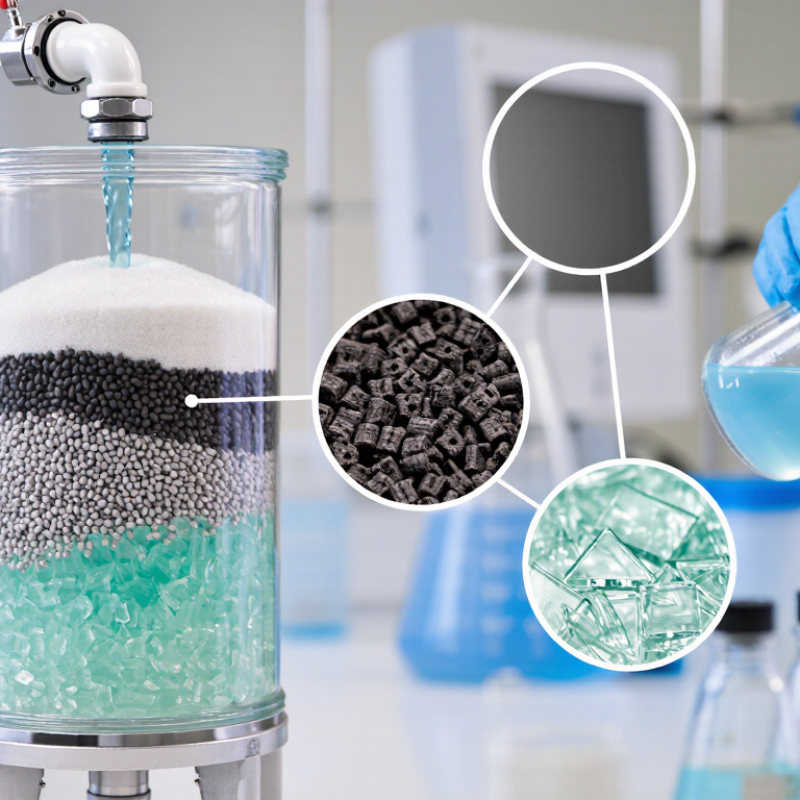
Filtration media is the working material that captures, separates, or neutralizes unwanted substances. It may be a fibrous sheet, granular bed, membrane, or porous ceramic surface. Its purpose is simple: protect equipment, improve water or air quality, and reduce exposure to contaminants. However, “best” depends on the application. A fine membrane may remove very small particles, but it can also reduce flow and increase energy use. Activated carbon can adsorb odors and some chemicals, yet it becomes less effective when its surface is exhausted.
Industry data shows why proper selection matters. The U.S. Environmental Protection Agency reports that indoor pollutant levels are often two to five times higher than outdoor levels. Its guidance also stresses source control and ventilation, not filtration alone. For drinking water, the WHO and UNICEF Joint Monitoring Programme reported that 2.2 billion people lacked safely managed drinking water in 2022. Filtration media supports treatment, but it cannot correct every chemical or biological risk. A clean-looking filter may already be overloaded. That is an easy detail to miss.
Tips: Match media to particle size, contaminant chemistry, flow rate, and pressure limits. Check performance data from recognized standards, such as ASHRAE 52.2 for air filters. Replace media according to pressure drop or verified capacity, not appearance alone. In practice, selection is rarely perfect. Real water quality, humidity, and maintenance habits can change the result.
How Filtration Media Removes Contaminants
Filtration media removes contaminants by trapping, adsorbing, or chemically changing them as water passes through its structure. Sand and multimedia beds capture suspended solids, while activated carbon adsorbs chlorine, odors, and many organic chemicals. Membranes work differently. Their tiny pores can reject bacteria, parasites, and dissolved salts, depending on membrane design and pressure.
The U.S. Environmental Protection Agency’s Drinking Water Treatability Database lists filtration, adsorption, and membrane processes for numerous contaminants. Its data also show that no single medium removes everything effectively. A carbon bed may reduce taste and volatile compounds, but it will not reliably remove all dissolved minerals. Reverse osmosis can reduce salts, yet it produces a concentrated waste stream and needs careful maintenance. Small details matter.
WHO guidance recommends keeping treated-water turbidity below 1 NTU where possible, because clearer water supports more reliable disinfection. The WHO and UNICEF Joint Monitoring Programme reported that 2.2 billion people lacked safely managed drinking water in 2022. This figure makes treatment choices more than a technical question.
In practice, operators should test the source water before selecting media. Flow rate, particle size, contact time, and replacement schedules can change results. A filter that performs well in a laboratory may struggle with seasonal sediment.
That is an easy point to overlook. Personally, I would treat “best media” as an incomplete question; the better question is which contaminant must be removed, and under what operating conditions.
Maintenance, Replacement, and Performance Considerations
Filtration media is the material that captures unwanted particles, chemicals, or microorganisms from water, air, or process fluids. Common options include granular media, filter cartridges, membranes, and activated carbon. The best choice depends on particle size, flow rate, fluid chemistry, and the required outlet quality. A fine medium may improve clarity, but it can also clog quickly.
Maintenance begins with routine observation. Check pressure differences across the filter, flow stability, leaks, unusual odors, and visible discoloration. Record these readings at consistent intervals. A rising pressure differential often signals loading, even when the filtered fluid still looks clear. Do not rely on appearance alone. Measure it.
Replacement timing should follow performance evidence, not only a calendar date. Replace media when pressure loss becomes excessive, flow falls below the process requirement, or test results show declining removal efficiency. Inspect housings, seals, and support screens during each change. Small cracks or poor seating can allow untreated fluid to bypass the media.
Performance also depends on installation and operating conditions. Excessive flow can reduce contact time and disturb granular beds. Incompatible chemicals may weaken media or release unwanted substances. I have seen operators extend service life to reduce costs, then face unstable output and longer cleaning cycles. That choice was understandable, but not ideal. A better record compares pressure, flow, contaminant levels, and replacement cost over time. Sometimes a less restrictive medium performs better overall because it maintains steady flow and needs fewer interruptions.
What Is Filtration Media and Which Type Is Best?
Filtration media is the material that captures particles or contaminants as fluid passes through a filter.
The best option depends on required efficiency, allowable pressure drop, operating conditions, maintenance access,
and replacement cost.
The chart compares representative initial pressure-drop ranges at a standardized air face velocity of
approximately 2.5 m/s. Lower pressure drop generally reduces fan energy use, while higher-efficiency media
usually require more frequent monitoring and earlier replacement as dust accumulates. Actual results vary with
filter construction, airflow, particle loading, humidity, and installation quality.
Coarse synthetic media
Low initial resistance and economical maintenance; suitable for prefiltration and larger particles.
Pleated synthetic media
Balanced particle capture, service life, and pressure drop for general HVAC applications.
Fine glass-fiber media
High particle-capture performance, but increased resistance and closer pressure-drop monitoring.
HEPA glass-fiber media
Very high efficiency for critical applications; replacement is normally based on airflow resistance or risk.
Reference context: representative engineering ranges aligned with common air-filtration testing practices such as
ASHRAE 52.2 and ISO 16890. Values are not product specifications.



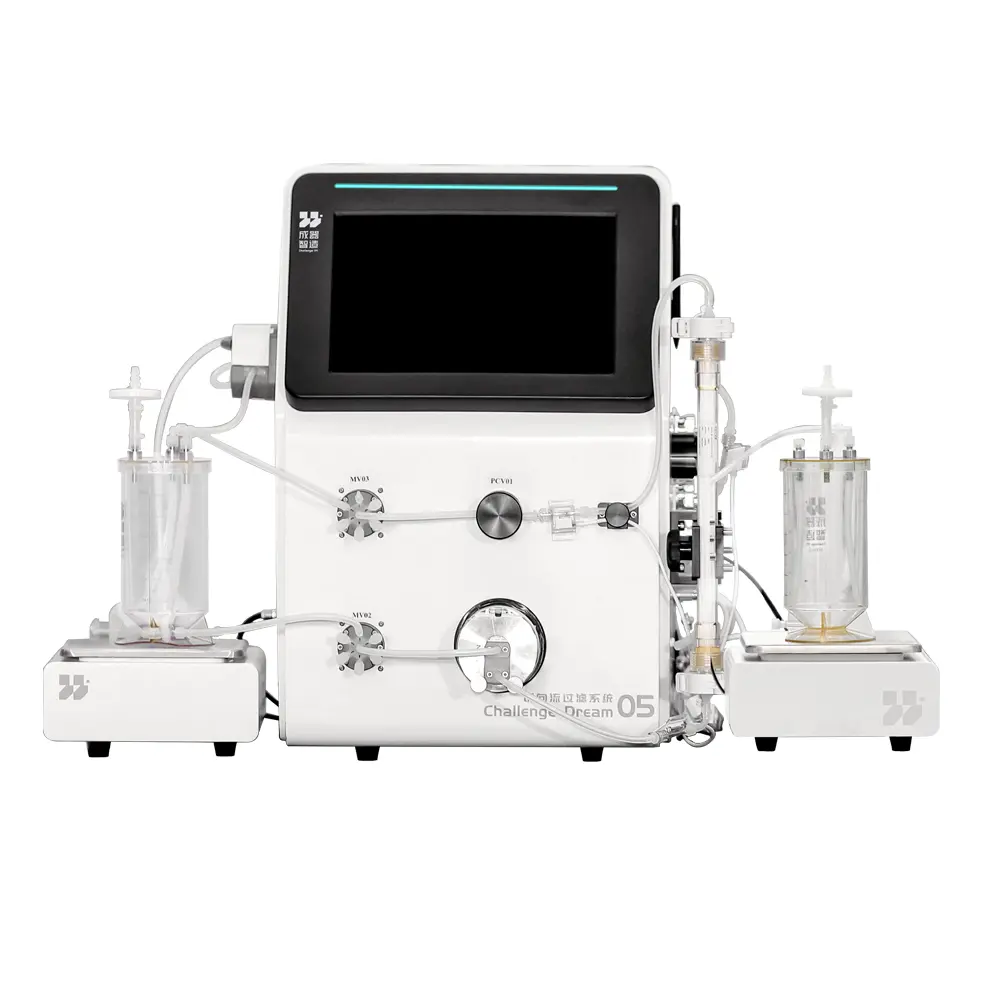 Tangential Flow Filtration(TFF) System
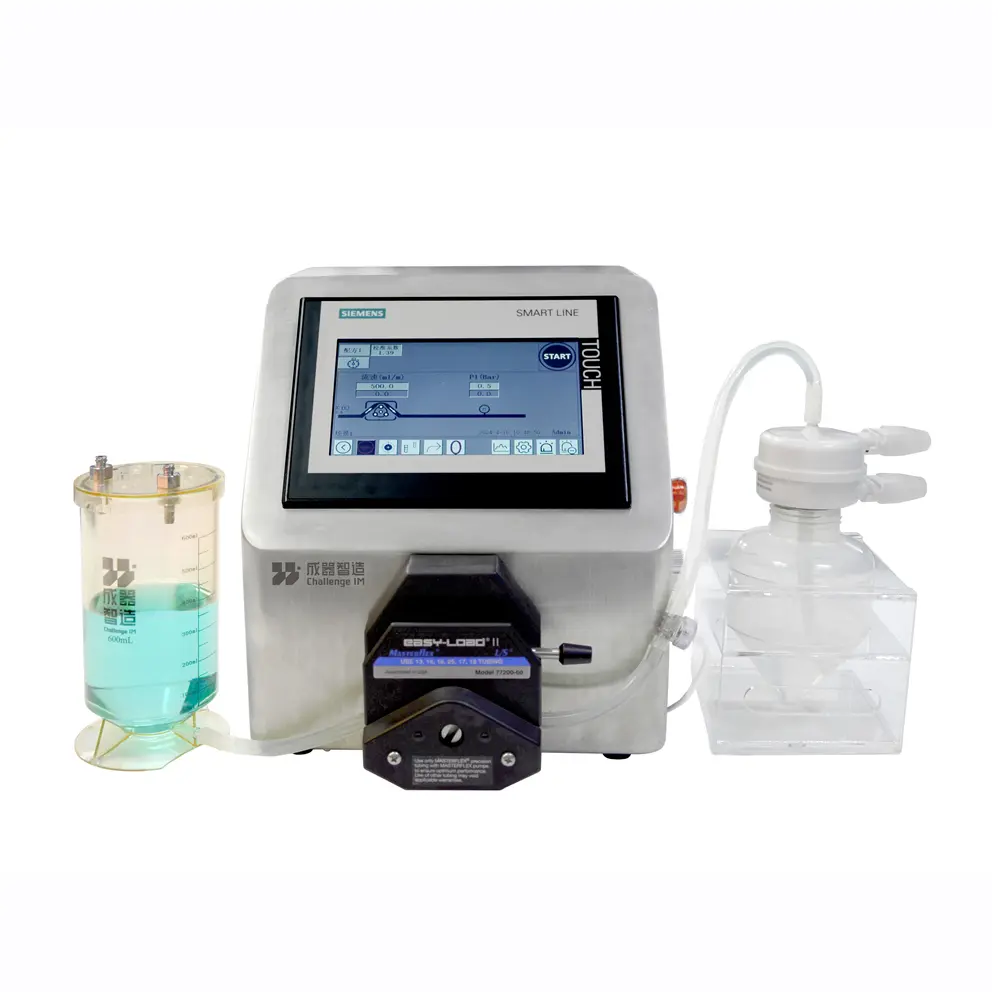 Jump Pump
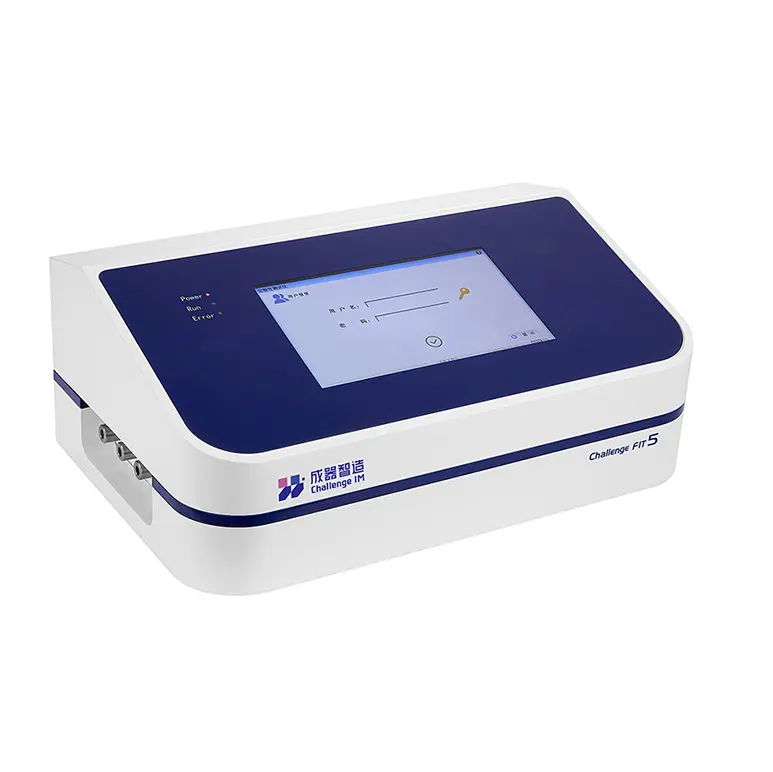 FIT Integrity Tester
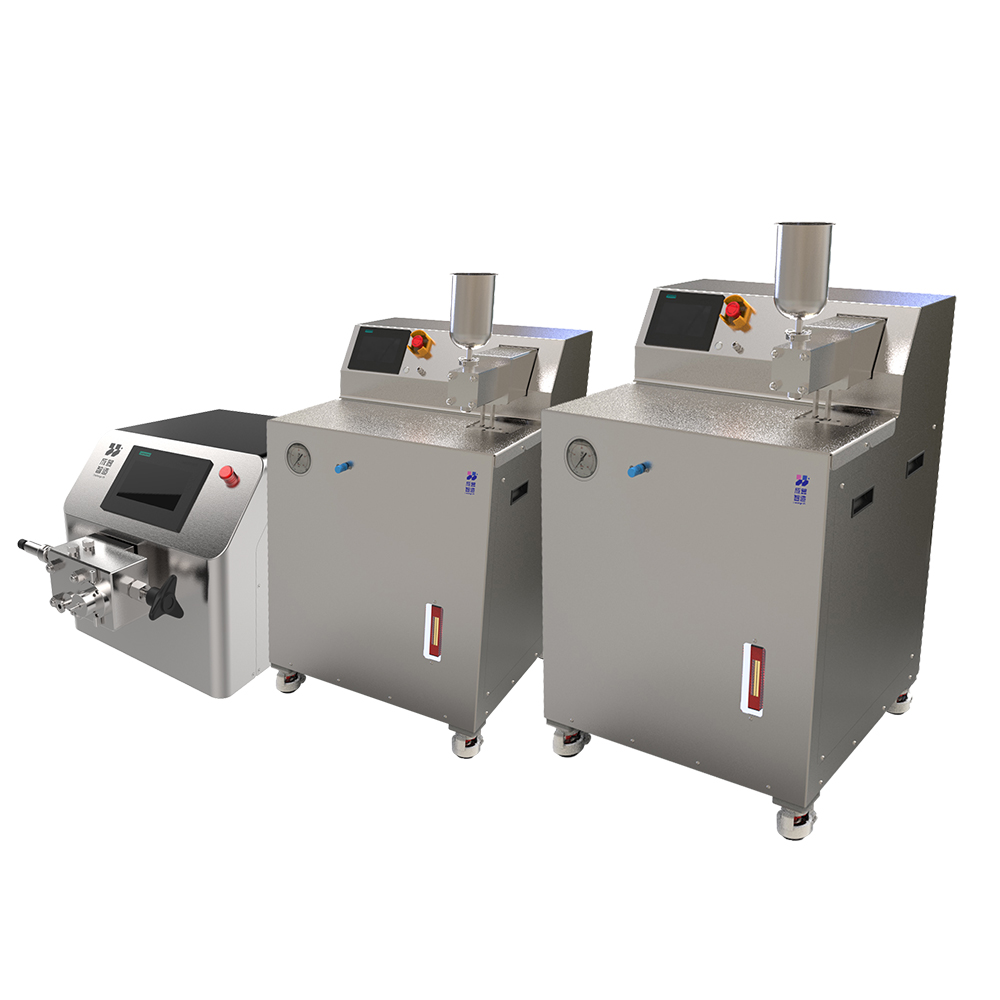 High Pressure Homogenizers
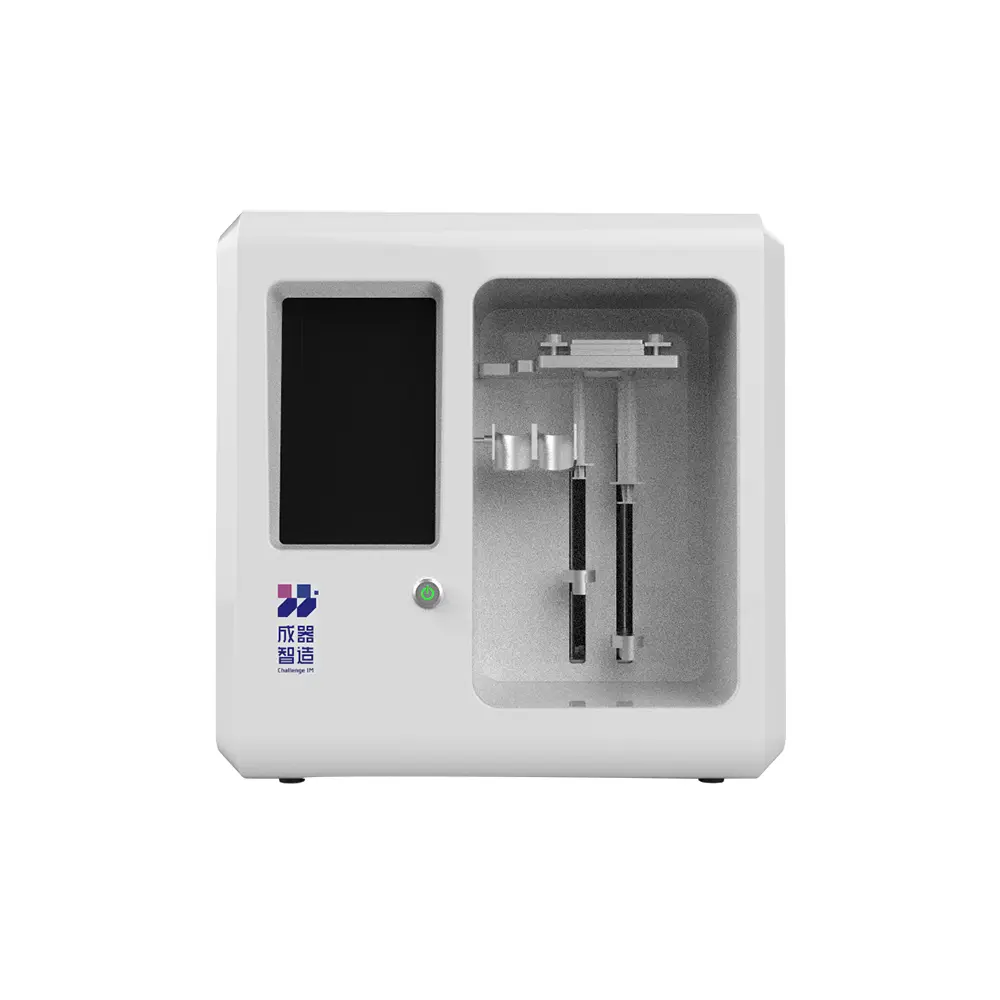 Microfluidics